- Asia Sustainable Travel
- Posts
- Further East 2025: Regeneration in Focus Amid Bali’s Overtourism Challenges
Further East 2025: Regeneration in Focus Amid Bali’s Overtourism Challenges

Asia Sustainable Travel
November 20, 2025

Dear AST friend,
In this week’s AST Briefing, we’d like to share our unfiltered reflections and the big lessons we took away from Further East 2025.
A quick reminder as we look ahead: Asia Travel Future Summit kicks off on December 3, 2025, with an updated speaker lineup that I’m genuinely excited about. You’ll find full details and the RSVP link below. 👇
If you like our content and want to support us, please share this newsletter with your friends to help us grow.
We plant a tree to welcome every new subscriber through our partnership with OneSeed.

Further East 2025: Regeneration in Focus Amid Bali’s Overtourism Challenges

Sophia Asghar, Associate Event Director of Further East
Further East returned to Bali at a moment when APAC’s tourism sector was being forced to confront its contradictions.
For the third year, Asia Sustainable Travel arrived with a question rooted in genuine curiosity: can this conference catalyze meaningful sustainability transformation in the region – a question we posed two years ago. And how might Bali’s overtourism pressures inform and inspire the conversation on regeneration?
Two years on, the efforts were palpable. The This Is Beyond team has elevated the event’s soul and substance — drawing in impact-driven organisations like Ragam Foundation, Sungai Watch, This Is Stellar, Tema Tea, I Am Sustainable Studio, and Handep. It is a sign of a maturing ecosystem: sustainability has moved from side conversations to center stage.
Yet Bali’s escalating pressure such as strained water systems, traffic gridlock, and overflowing waste — loomed over the 4-day conference like an unspoken counterargument.
The elephant in the room became impossible to ignore: is it responsible to convene hundreds of travel professionals here at a moment when the island’s resources are stretched thin?
In this article, we’d like to share our unfiltered take — and the key lessons that emerged from Further East 2025.
Open House: Impact, Purpose, Regeneration — and AI — Took Center Stage
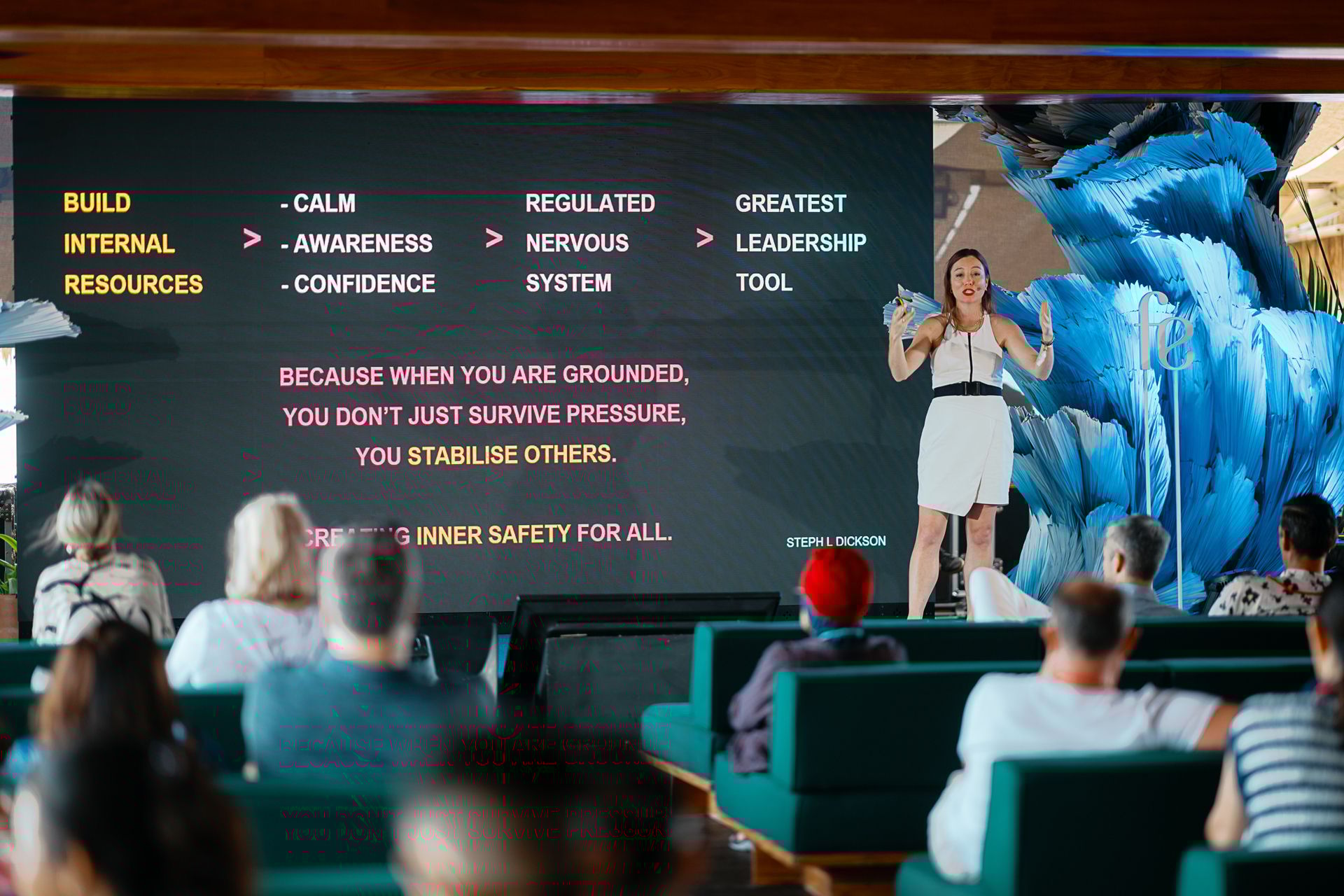
Stephanie Dickson, Founder, The Wedge Asia
Open House has always acted as Further East’s emotional barometer. This year, the pulse felt steadier, sharper, and more urgent.
The conversations across the Circle, Amplify, and Horizon stages carried an unmistakable undercurrent: the era of glossy sustainability marketing is ending. What replaces it must be execution, accountability, and system-level repair.
Interrogating AI, Not Blindly Embracing It
At the Circle Stage, Erica Fong of LUXE City Guides led the session that captured this shift best: “When Does AI Enhance Us, or Go Too Far?”
For once, the room did not marvel at AI’s novelty. It confronted its implications.
Hospitality leaders openly acknowledged AI’s growing grip on guest messaging, marketing pipelines, and operational decisions. But the subtext was clear: efficiency without guardrails invites new vulnerabilities — IP exposure, homogenized brand voice, and a widening digital divide between major hotel groups and independents.
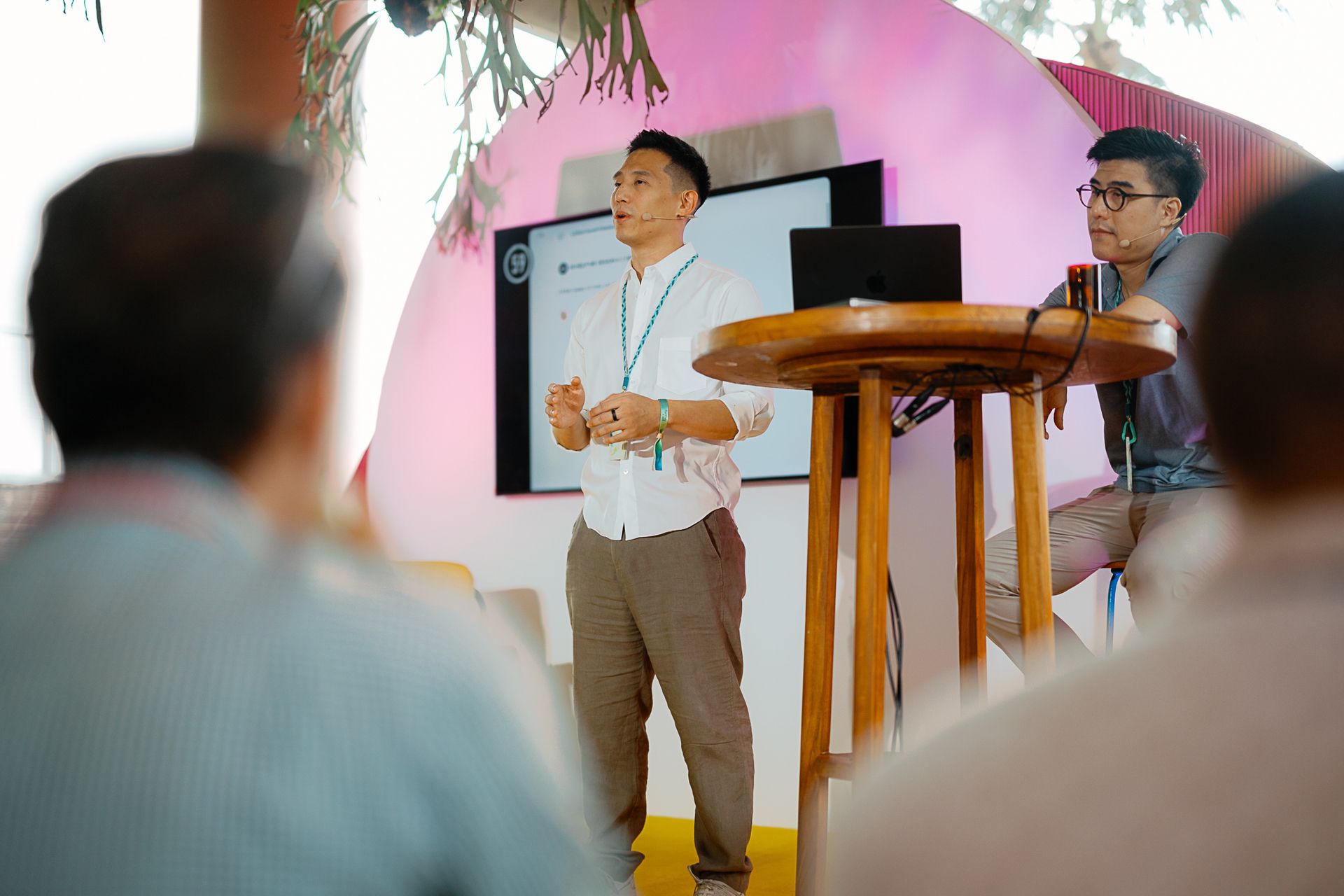
From left: Alex Liu, CTO and Mathew Lo, CEO of Advant Labs
Later on the Horizon Stage, Advant Labs’ CEO Mathew Lo and CTO Alex Liu offered a rare, behind-the-scenes look at AI’s rapid evolution — from a basic language-processing tool into a powerful engine for workflow orchestration and productivity.
Their session moved beyond theory, grounding the presentation in real-world applications, including client testimonies that revealed how their AI system is already reshaping guest personalization. It was a glimpse into a future where hospitality’s competitive edge may hinge not on adopting AI, but on understanding how to wield it with purpose.
Purpose as the Missing Operating System
On the Amplify Stage, impact surfaced as the defining tension line in hospitality’s future.
In “The Inner Climate: Your Impact Strategy’s Missing Link,” Stephanie Dickson challenged hotels to look inward. Her argument was that sustainability cultures cannot emerge in teams lacking psychological safety, emotional literacy, and self-awareness. Technology, infrastructure, and certifications matter, but the mindset driving them matters just as much.

From left: Neil Jacobs, Founder of Wild Origins and Lexie Rodriguez, VP - Lifestyle, Capella Hotel Group
The later conversation, “The Art of Reinvention: Charging a Brand with Purpose,” with Wild Origins’ Neil Jacobs and Capella’s Lexie Rodriguez, took that point even further.
As the visionary behind Six Senses, Jacobs helped redefine what modern luxury could be — conscious, experiential, and rooted in wellbeing — and now brings a rare vantage point that spans both the deep roots of high-end hospitality and the frontier of what comes next.
Together with Rodriguez, he unpacked the friction between legacy brand identity and the urgent need for reinvention.
The dialogue was a reflection on what a world-class brand must demand from day one, and where hospitality must evolve to remain relevant, bold, and unmistakably human.
Why Does Bali Need Regeneration?
On the Horizon stage, then came one of the most anticipated sessions of the day: “How to Construct & Refine Regenerative Design,” moderated by the author, featuring Rigzin Lachic, Founder of Dolkhar Ladakh, Radit Mahindro, Senior Director of Marketing, Desa Potato Head, and Maitri Fischer, Co-Founder & CTO, Eco-Mantra.

From left: Jeremy Tran, Co-Founder, Asia Sustainable Travel; Rigzin Lachic, Founder of Dolkhar Ladakh; Maitri Fischer, Co-Founder & CTO, Eco-Mantra; and Radit Mahindro, Senior Director of Marketing, Desa Potato Head.
The panel challenged the industry and Bali to move past sustainability as a defensive tactic — and toward regeneration as an active responsibility.
“If you’re in an untouched place, sustainable design might be enough,” Fischer argued. “But if you’re in Bali, sustainable design is no longer sufficient. We must move towards regenerative design.”
Regeneration reframes tourism entirely. As Fischer noted, tourism doesn’t behave like a traditional sector — it acts as a system integrator, touching food systems, water infrastructure, transport networks, cultural heritage, and governance. A regenerative hotel cannot exist in isolation; it requires regenerative supply chains, regenerative communities, and regenerative ecosystems.
Mahindro brought this reality home with a powerful reflection he previously shared in Travel + Leisure Asia: “Tourism here isn’t just a business model. It’s a design language, a core memory, a performance. And behind every welcome drink and infinity pool lies a quiet question: Who is this version of Bali for?”
When pressed on how regenerative design might answer that question, he didn’t hesitate. In the past century, Bali’s tourism sector has been shaped and packaged for outsiders — and post-pandemic demand has only intensified the strain. Tensions between locals and visitors are surfacing in ways he has never witnessed. The island’s famed hospitality is being tested.
That is precisely why regenerative frameworks matter. They shift the focus from building for tourists to building with and for the community to make a destination a more desirable place to visit and live in.
Examples of Regenerative Designs
If sustainability asks us to neutralize harm, regeneration asks a far more ambitious question: how can the places we build become engines of ecological and cultural renewal?
Two projects, Dolkhar in Ladakh, India and Begawan Biji in Bali, Indonesia outlined in the “How to Construct & Refine Regenerative Design” panel discussion offer early glimpses of what that regenerative future could look like.
→ Go deeper into how these two projects show how regenerative design can reshape tourism to actively restore ecosystems and support local cultures, providing practical solutions for destinations like Bali to tackle the challenges of overtourism.

Register for the Asia Travel Future Summit: “Will AI Drive or Derail the Sustainable Travel Transformation in Asia?”

Speakers
Julie Cheetham, Travalyst, Chief Operations Officer
Chris Legaspi, Archipelago International, Chief Commercial Officer
Dimitri Syrris, Baotree, Founder & CEO
Benjamin Lephilibert, Lightblue, CEO & Founder
Tara Schwenk, Lemongrass Marketing, Senior Director of Digital Strategy
Fernanda Rodak, Pacific Asia Travel Association (PATA), Manager – Sustainability and Social Responsibility
Matteo Bierschneider, Wise Steps Group, Co-Founder
Rhea Vitto Tabora, Asia Sustainable Travel, Co-Founder
Jeremy Tran, Asia Sustainable Travel, Co-Founder
Program - Subject to Change
15:00 Welcome Remark + Keynote Fireside Chat
15:20 Panel Discussion: Mastering the Synergy of Humanity and AI to Drive Operational Excellence
16:05 Panel Discussion: Navigating AI-Driven Data Collection and Marketing Responsibly
16:50 Closing Remark + Q & A
How to RSVP
The online summit is free to attend. Our mission is to democratize sustainability knowledge.
Attendees are invited to make voluntary contributions that support the continuation of high-quality, insight-driven conversations, with a percentage going directly to traceable social and environmental projects.
AST Trailblazer and contributors of USD 25 or more will receive:
Access to the summit recording
A complimentary AI-Powered Marketing playbook to get ahead of the curve

 |  |
 |  |


This newsletter may contain affiliate links. If you click on one and make a purchase, we may earn a commission at no additional cost to you. Our recommendations are based on thorough research and personal experience, and we only promote products and services we genuinely believe in. Thank you for supporting our work.